Needles for embroidery
How needles differ from each other
For different kinds of embroidery/stitches/fabric, there's the most suitable needle. If you feel that you have to pull too hard to pierce the needle through the fabric, if the needle breaks, if there's too much abrasion on the thread - you may need to change the needle
What's the difference between needles:
- needle point (round, sharp)
- needle eye ( big, small)
- length of shaft (short, tall)
- diameter (thick, thin)
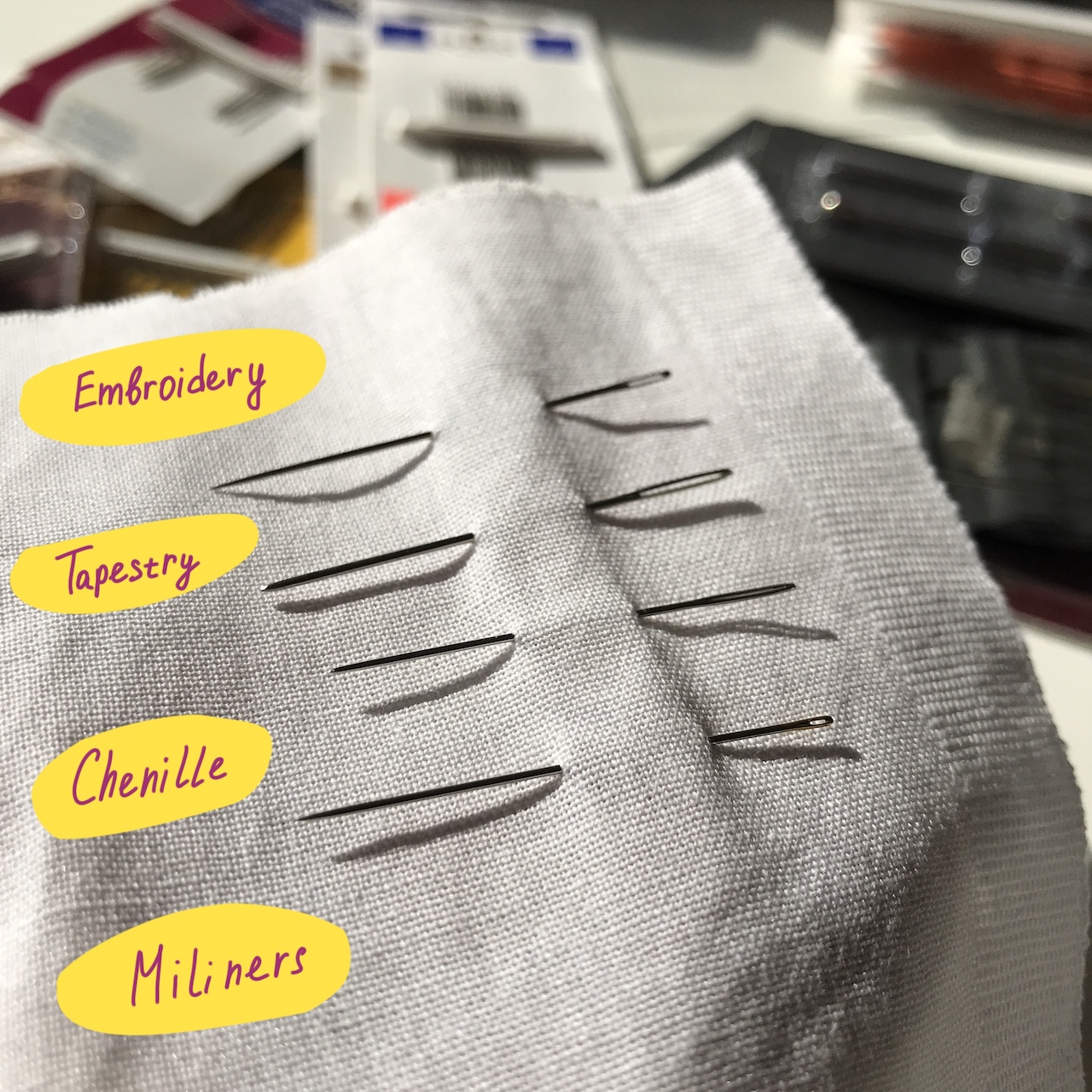
The most common types of needles for embroidery
Okay, let's move to the characteristics of the most commonly used needles for embroidery:
1. Embroidery/Crewel needle
Big eye and sharp tip. The eye is slightly wider than the shaft. Used for surface embroidery, crewel embroidery, and sewing in general.
Comes in sizes 1-12. The best pack to get is with sizes 3-9
The smallest size is 12
My opinion: That's my choice for most of the projects. My usual size is 5. Good for cotton fabric and 1-6 strands of cotton special thread
2. Tapestry/Cross stitch needle
Big eye and round tip. The eye is wider than the shaft. Good for linen, Aida, and counted embroidery. Good for whipping and lacing when you don't need to pierce the fabric.
Comes in sizes 13-28. Size 13 is the biggest (yes, that's confusing!!!). For embroidery, I use sizes 24, 26 and 28
My opinion: I personally think tapestry needle 26 on linen is a good combo for beginners in hand embroidery. Fewer fingers hurt and no blood if you poke yourself. Although it won't work so good for very detailed projects or if you need to pierce a thick layer of stitches
3. Chenille needle
Large and long eye and sharp point. Shorter and wider than embroidery needles - just like the tapestry needles but with a sharp end. Used for all kinds of embroidery: surface, crewel, chenille
Sizes are the same as for tapestry needles, going from 13-28. Size 13 is the biggest
My opinion: You need it only if you do ribbon embroidery or embroidery with wool or yarn and need more space in the eye for thread
4. Milliner/straw needle
Small round eyes and sharp tip, also they're longer than previous needles. The shaft is the same width as the needle so it's mostly used for different kinds of knots and cast-on stitches (in the embroidery world). In the regular world, they're used to making hats (cool!). And it's also good for beading
Comes in sizes 1-10. Size 1 is the largest
My opinion: if I need to make a small amount of cast-on stitches I prefer to do it with an embroidery needle. For the tiny stitches in great amounts - a good needle
5. Fun needles that I want to mention but you don't really need
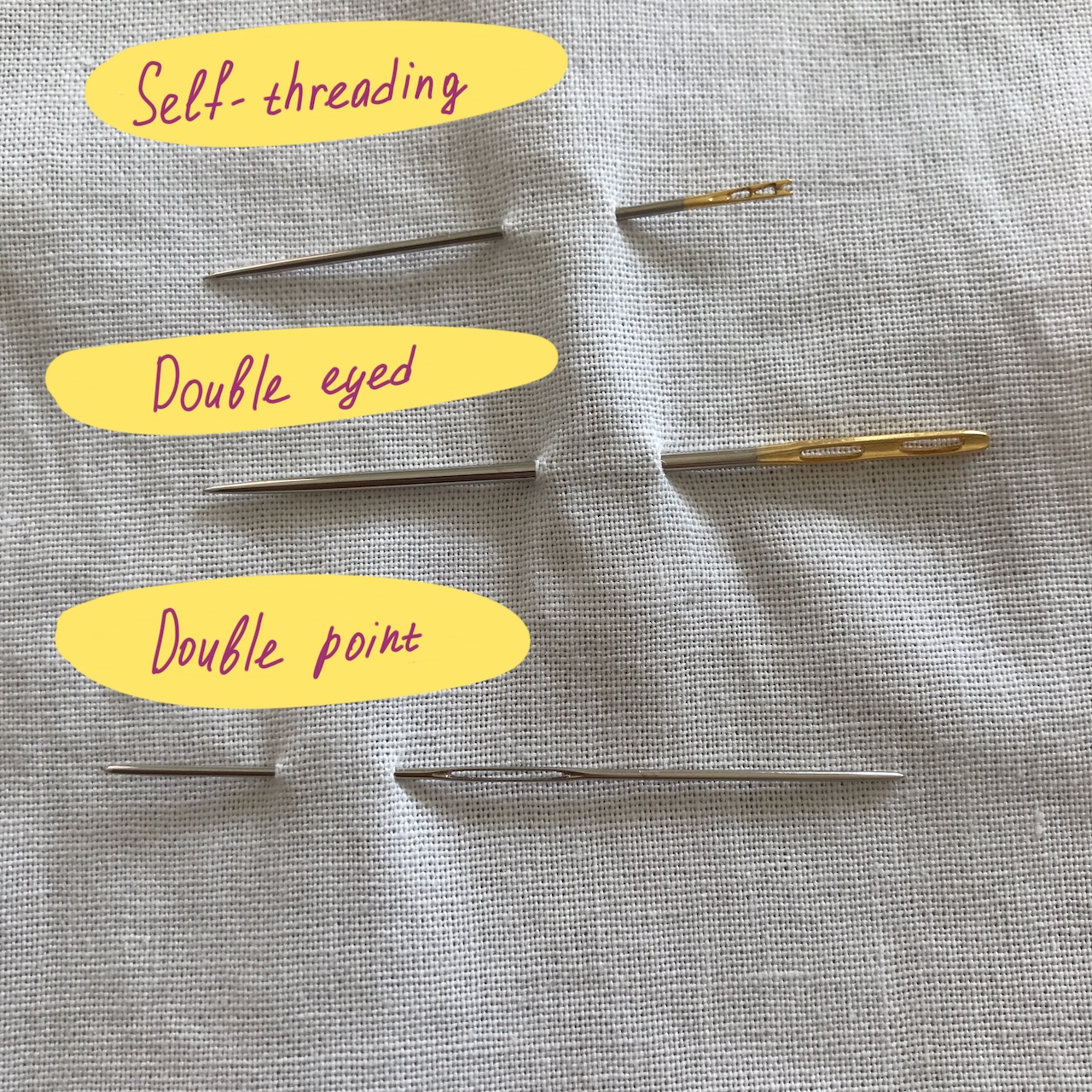
- Self-threading needle
- Double eyed needle
- Double point tapestry needle
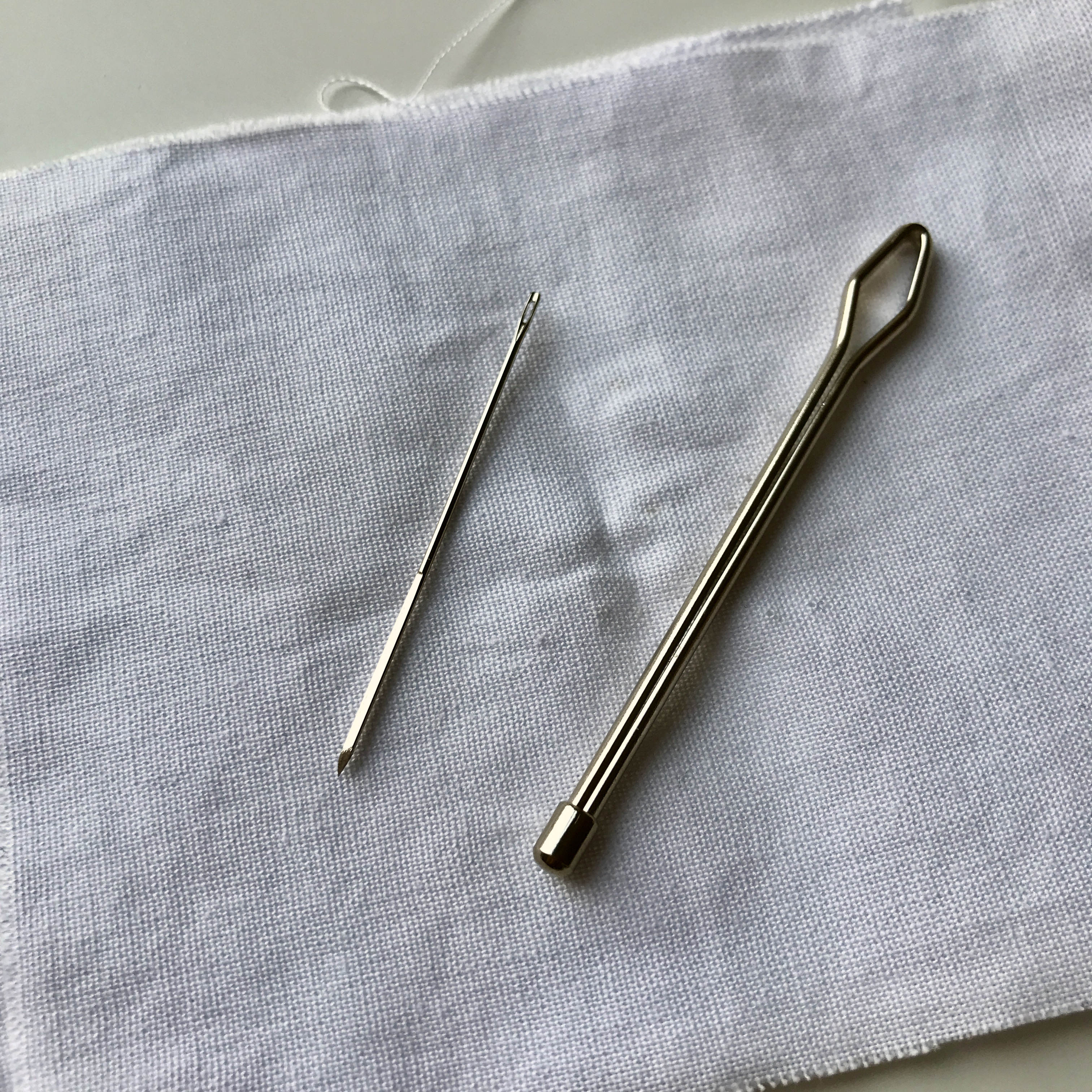
There are still lots of needles I didn't mention because they're specific to the kind of craft you're making. Like a beading needle is for beading. The darning needle is for darning and the quilting needle is for ... quilting! Variety is huge so I limited the options to the needles that I use.
However, I recently bought leather needles because they look funny 😅 And bodkins (used to thread ribbons and cords through casings) for the same reason. I don't embroider leather but want to try using these as a laying tool to make stitches super neat. Leather needles have a triangle-shaped end and the sides of the triangle are flat. And bodkins... well maybe I'll need them sometime, come on!
So which one do I need?
ALL (NO)
I say go with a pack of embroidery needles if you're planning to embroider on cotton with 6 stranded embroidery thread. Sizes 3-9 will get you covered for the most situations
It won't be bad if you'll get some chenille or tapestry needles if you want to fit thicker thread or embroider on linen, Aida, or tulle
How do I understand that I'm using the wrong needle? How to choose a needle?
The hard truth is, that you won't use completely different materials for every embroidery. You'll have your favorite fabric, techniques, and stitches. And favorite needles as well to go with these. Embroidery needle size 5,7 is an almost universal option for me except for the moments when I take chenille and embroider with yarn or Perle cotton
Get a pack of needles and when you start the project ask yourself:
What fabric am I using? The higher the fabric count - the smaller and sharper needle you need. A higher count means there are more threads of the fabric in one cm (inch). Cotton has a higher thread count than linen
How many strands I'm planning to use? More strands - bigger eye and shaft you're going to need
The goal is to be able to pierce fabric easily when you need to and not damage the thread. You should be able to pull through the fabric without strong resistance and not leave visible holes with your needle.
Your comfort and feeling "I don't think is right" is also great guidance in the choice of needles. That's why it's handy to have a few needle options ready
Examples
What's wrong here?
(the answer is under the photo, you can take some time to think about it and then compare the answer)
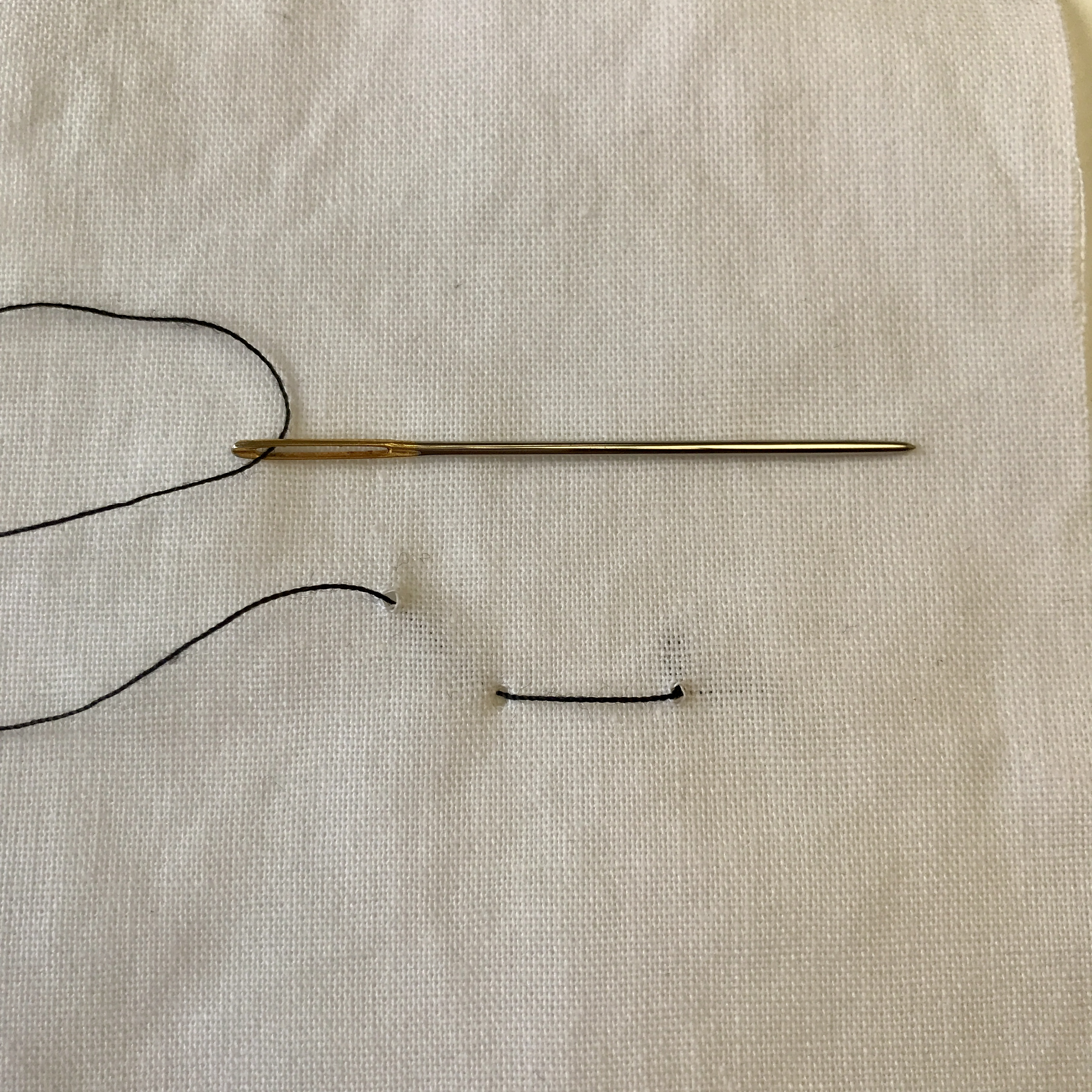
The needle is unnecessarily big. It leaves holes in fabric and is hard to pull through the fabric (you don't see it but you'll feel it)
And which needle would be better here?
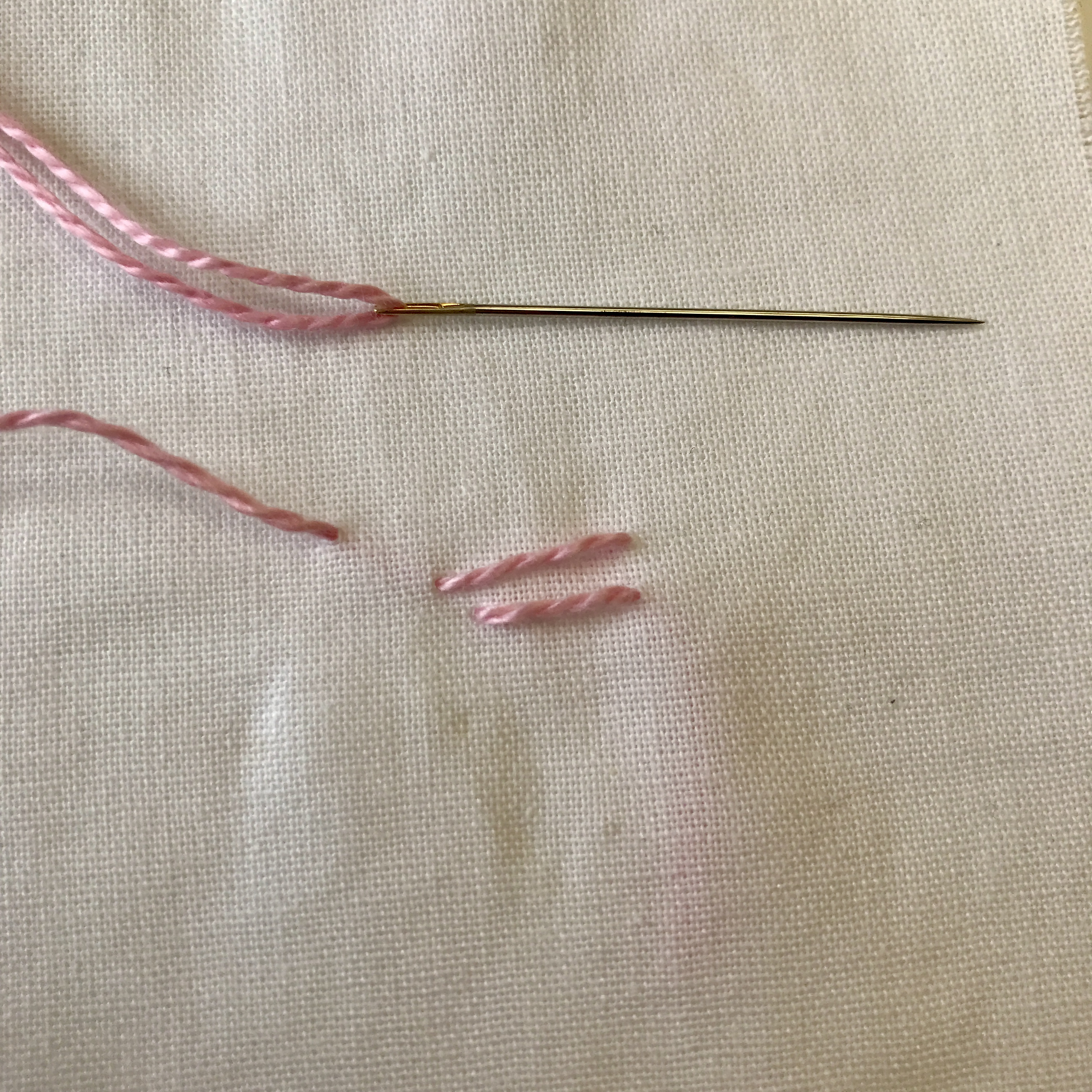
Perle cotton is wider than the needle shaft, especially near the needle eye where it's doubled. It means that the thread will be damaged by constant friction from the fabric. Taking a chenille needle with a bigger eye for this project is a good idea!
Which brands are the best?
The most popular and good quality: DMC, John James, Bohin, Thomas & Sons, Prym.
I use mostly DMC, Prym, and Micron (which I got in a Russian craft store and can't find online)
Do I need to clean needles? How? How often?
Yes, you need to clean the needles and it's easy. Oils from our hands and moisture are not very good for the needles. They rust (turning brown) and tarnish (turning black). But that's fixable!
You see, turns out the pincushions shaped like tomatoes have this dangling strawberry thingy for a reason. They are supposed to be filled with emery sand which cleans and sharpens needles. You pierce it a couple of times and the needle will get back to its previous glory. Go all the way in one direction.
Why are they shaped like strawberries? That's how it was for years, apparently
Bad news: not all pin cushions have the right strawberry. Mine was useless, for example.
Good news: now you know what to look for. Usually, the package says if it contains emery sand/powder.
Tomato pin cushion with emery on amazon
(affiliated link, I may receive a small commission from your purchase)
How often are you supposed to change your needle?
There's no exact moment like "after 100 stitches it's garbage".
You can't get it clean anymore? Rust and tarnish don't go away even after polishing with emery sand? If you love this needle, it pierces through the fabric easily and rust doesn't leave traces on the fabric - use it. If not - it's time to let this needle go.
It is broken in a half? (Kind of obvious, but I have to mention). A broken needle has to go.
It has a burr on the side and catches thread and fabric. Try to polish it with emery sand, if it doesn't help - the needle has to go.
If it's bent (usually happens with small chenille needles) - you can straighten it, but after a couple of times, it'll become more likely to break. Unpopular opinion: I love to use slightly bent needles sometimes because it's bent exactly the way I hold them. If it's comfortable - use it. If it makes the embroidery experience unbearable - change it.
How to store needles?
A good solution is to store them in wool felt. It doesn't clean or polish. But it'll keep them lubricated because of the wool wax (lanolin).
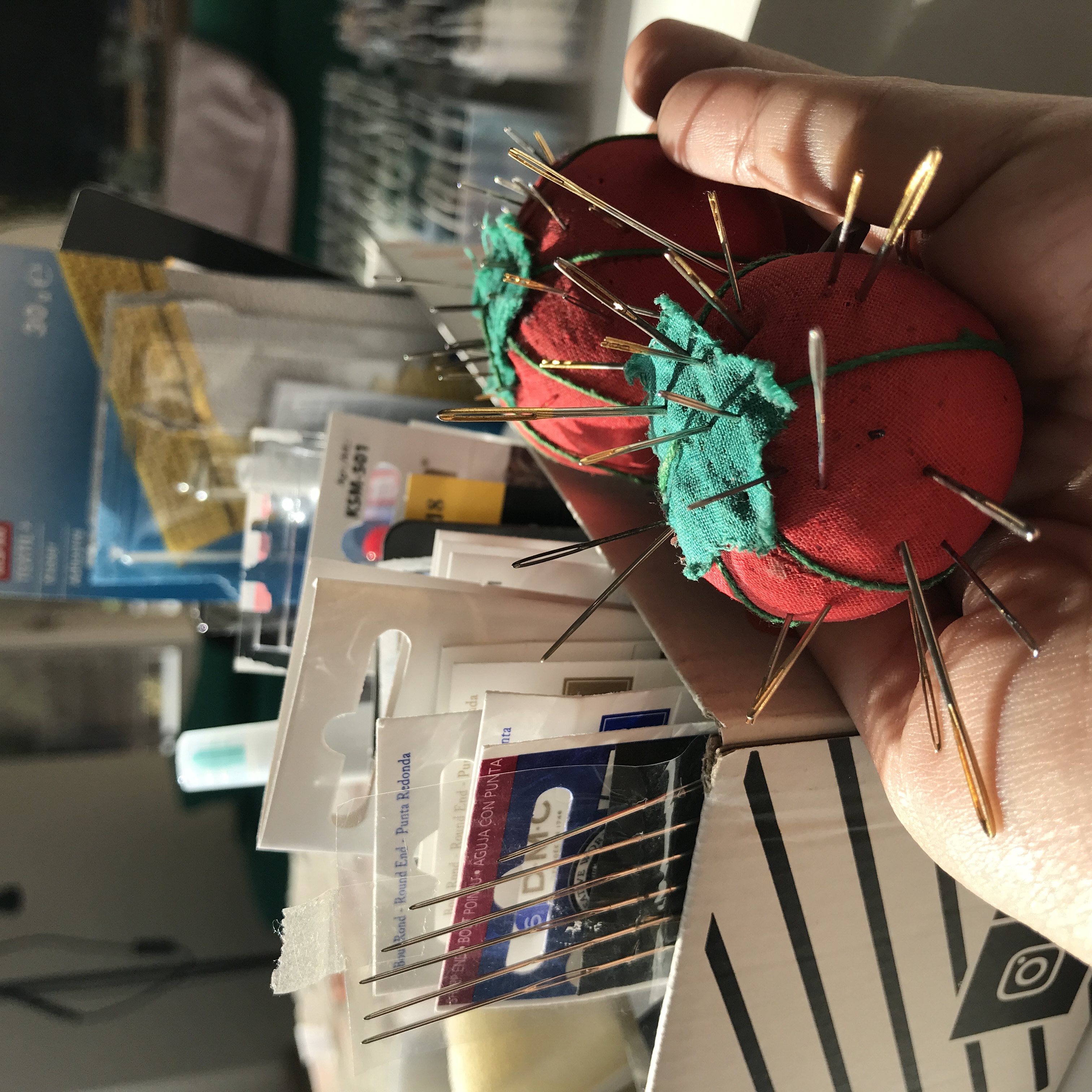
My now past (dis) organization: pin cushions and packages in the box.
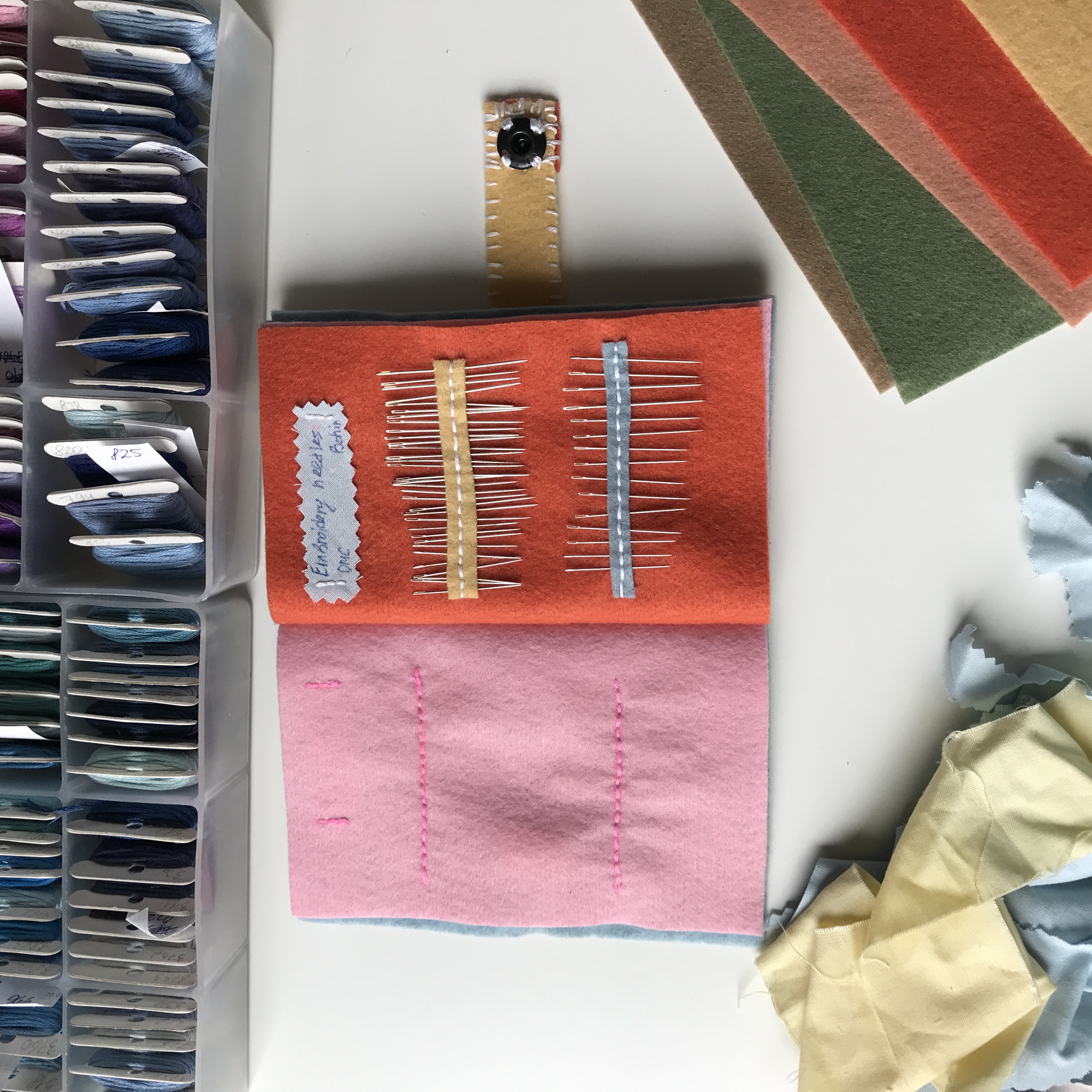
In November I made the needlebook from felt and now all my needles are stored inside. The process is captured on video and I made an article about it as well: Needle book
Whole process is captured in the video
You may also want to check out the process on a new pincushion. I used thread scraps to fill it and some emery sand so now I can clean needles easily
That's all I wanted to say about needles!